RTM-Suite: an open framework for radiative transfer modelling in R and Python
A unified, reproducible ecosystem for vegetation and Earth Observation research
Software release · 27 August 2026


The Laboratory of Geo-Information Science and Remote Sensing at Wageningen University has released RTM-Suite, an open-source framework that brings radiative transfer modelling, sensor simulation, and plant-trait retrieval together in a consistent R and Python ecosystem.
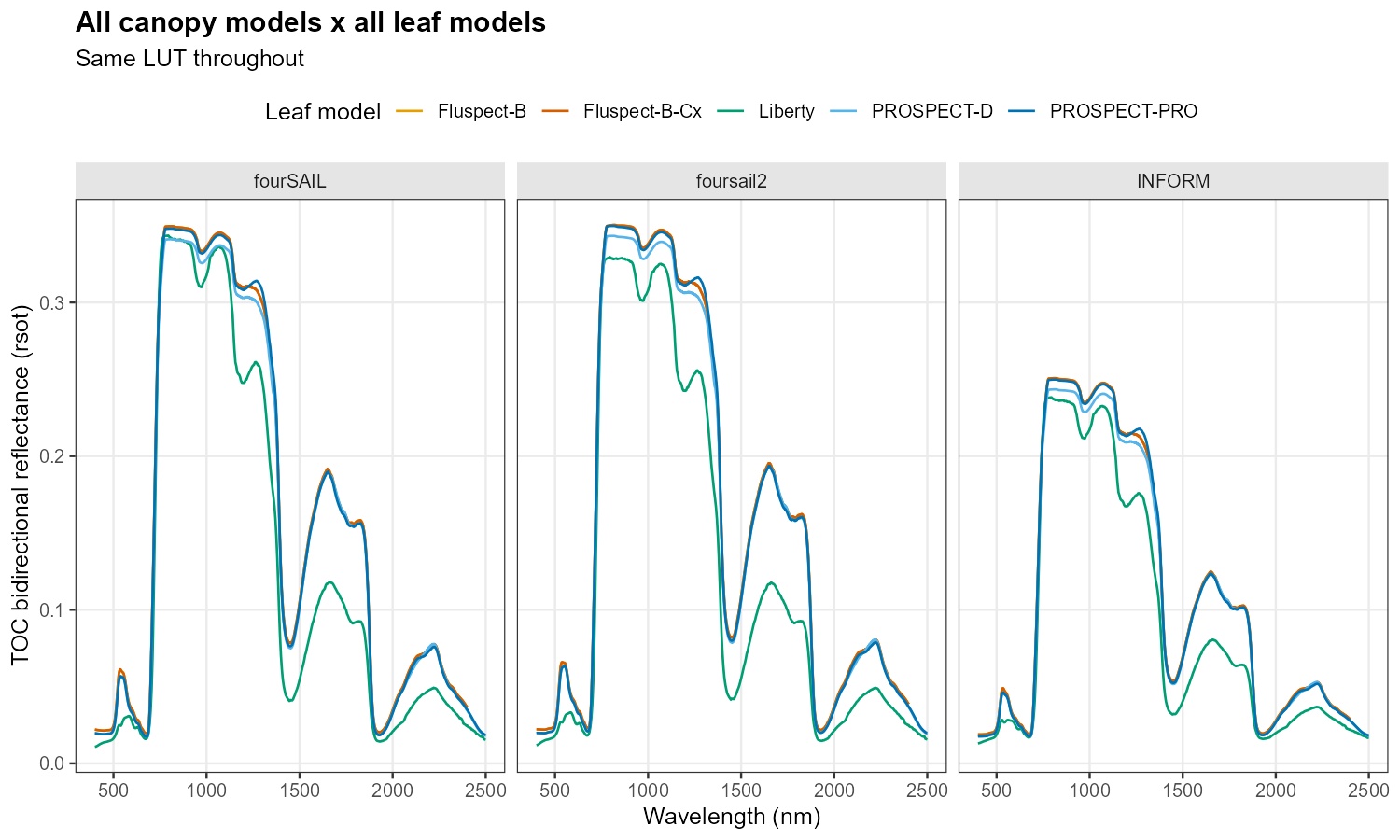
From leaf optics to Earth Observation
Radiative transfer models provide the physical link between vegetation properties and the spectral signals measured by field instruments, airborne systems, and satellites. RTM-Suite makes this modelling chain easier to use, compare, and reproduce. It combines models of leaf optics, canopy structure, soil moisture, atmosphere, energy balance, and sun-induced chlorophyll fluorescence within one documented environment.
The suite currently brings together five complementary packages and libraries:
- ToolsRTM and toolsrtm for leaf and canopy optical modelling, sensor convolution, spectral indices, and trait inversion;
- SCOPEinR and scopeinpython for the SCOPE energy-balance, photosynthesis, and fluorescence model; and
- ToolsRTM.app, a collection of interactive applications that makes the models accessible through point-and-click workflows.
Implementations in R and Python are kept numerically aligned and verified against one another. Researchers can therefore choose the language that best fits their workflow while working from a shared physical foundation.
One connected research environment. RTM-Suite supports the full path from forward simulation to the inversion of Earth Observation data.
Learn through reproducible tutorials
RTM-Suite is accompanied by 31 step-by-step tutorials in R and Python. They range from first simulations with PROSPECT and fourSAIL to advanced workflows for SCOPE, sensor convolution, look-up tables, machine-learning inversion, and satellite data access. The tutorials include figures generated by code that users can run and adapt themselves.
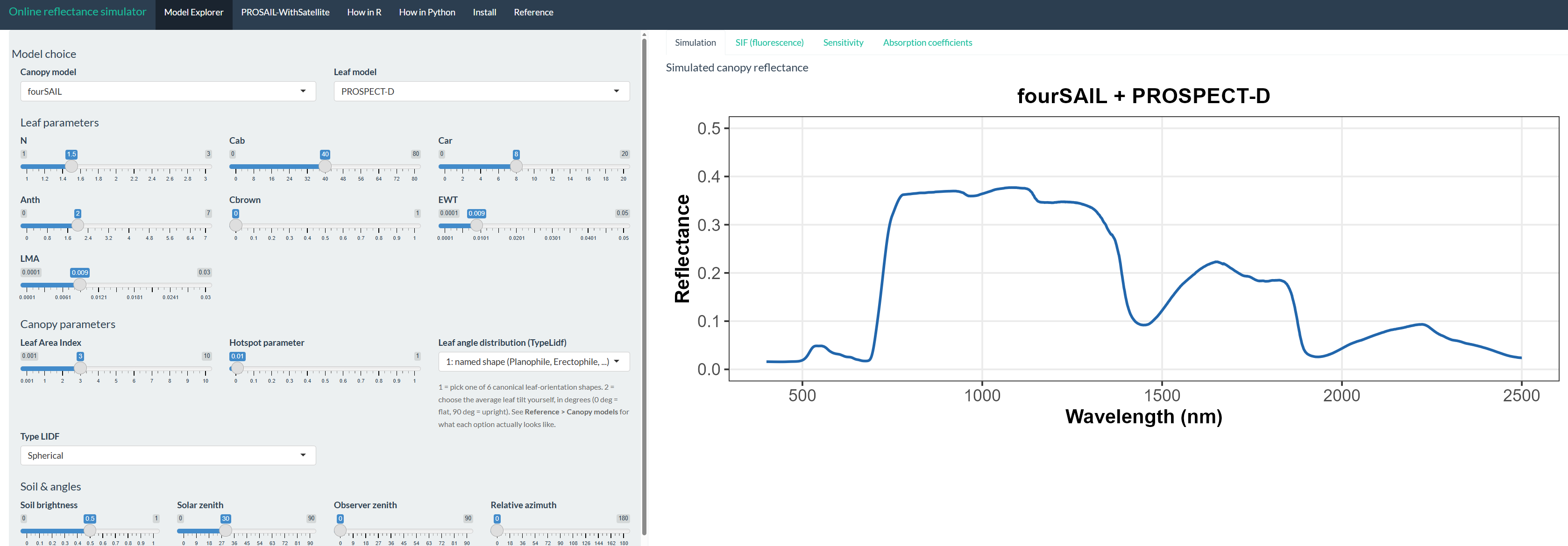
Interactive applications provide an accessible route into model simulation, sensitivity analysis, inversion, and satellite workflows.
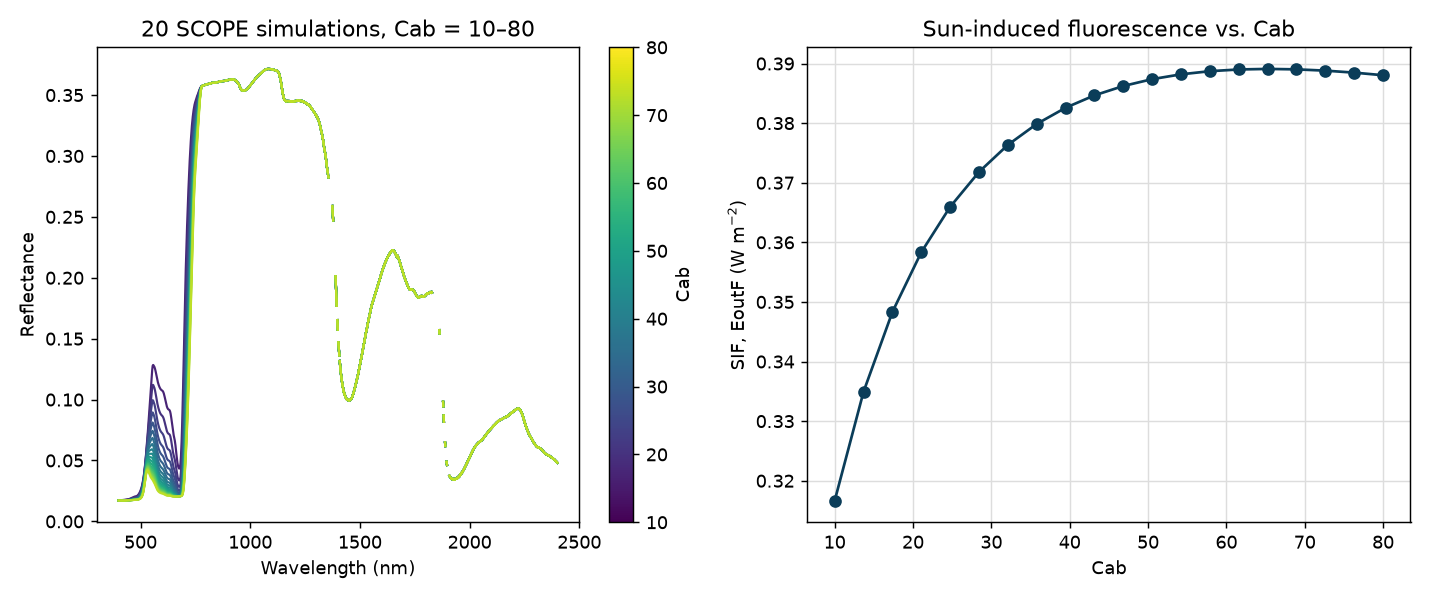
A tutorial example exploring canopy reflectance and sun-induced fluorescence responses across a chlorophyll gradient.
Supporting HYDRA-EO’s open-science approach
Radiative transfer modelling is central to HYDRA-EO’s hybrid approach to crop-stress detection. Physically based simulations help interpret spectral, thermal, and fluorescence observations and support machine-learning models that remain connected to plant traits and processes. RTM-Suite provides an open and reusable foundation for this work, while also serving the wider vegetation remote-sensing community.
The software is developed through collaboration between the Laboratory of Geo-information Science and Remote Sensing at Wageningen University & Research and CNR-IBE in Florence, Italy, as part of the Virtual Biophysical Lab.
Continue exploring
Explore RTM-Suite Source code HYDRA-EO pipeline R tutorials Python tutorials Project news
© 2026 HYDRA-EO.
HYDRA-EO is funded by the European Space Agency (ESA) under the EXPRO+ Tender “Crop Multiple Stressors, Pests and Diseases”. Action 1-12684.